CRISIS OF CONFIDENCE - LDEA


I have listened to some of the commentary surrounding the appointment of retired Major General Daniel Dee Ziankahn to the Liberia Drug Enforcement Agency (LDEA). Some have characterized his placement, after serving as Chief of Staff of the Armed Forces of Liberia (AFL) and subsequently as Minister of National Defense, as a demotion.
Respectfully, I see it differently.
Given the seriousness of the drug-trafficking challenge facing Liberia, I believe this appointment should be viewed not in terms of rank or hierarchy, but in terms of the national emergency we are confronting.
If reports and allegations about corruption and the penetration of drug-trafficking interests into law-enforcement institutions are even partially accurate, then Liberia is facing a crisis of confidence in the institutions entrusted with combating the drug trade. That makes this fight bigger than the LDEA. It is a national security, governance, and economic issue that deserves the attention and resources normally associated with an emergency national project.
That is why I welcome the decision to place someone of General Ziankahn's background and stature in this position.
General Ziankahn is, in my view, a soldier's soldier. Throughout his public service, he has built a reputation for discipline, professionalism, and integrity. His background gives him the institutional experience and authority to confront a problem that requires more than routine law-enforcement methods. The government should therefore give him the political backing, operational independence, personnel, intelligence capabilities, and financial resources necessary to succeed.
But General Ziankahn alone will not be enough.
The LDEA needs to be strengthened around him with the right team and the right capabilities. This should include experienced investigators, intelligence officers, prosecutors, financial investigators, forensic accountants, information analysts, and personnel with the technical capacity to trace international financial transactions and identify beneficial ownership of assets and companies.
Having the muscle to intercept drugs is important; following the money is even more important.

The ultimate incentive behind large-scale drug trafficking is money. If we only seize shipments, arrest couriers, and prosecute the people at the bottom of the chain, we may win individual battles without dismantling the organization. The objective must be to identify who finances the operation, who facilitates it, who launders the proceeds, who owns the assets, and where the money ultimately goes.
This is where Liberia needs to think differently. A serious anti-narcotics operation should have a strong financial-intelligence and asset-tracing component, working closely with the financial intelligence authorities, banking institutions, prosecutors, customs, immigration, international partners, and other relevant agencies. The objective should be to move from simply asking, "Where are the drugs?" to also asking, "Where is the money, who controls it, and who benefits from it?"
There are important international examples of what can happen when drug trafficking becomes intertwined with weak institutions and corruption. The case of Mexican General García Luna. García Luna was not president, but his case may be even more relevant to the current Liberia debacle in law-enforcement corruption.
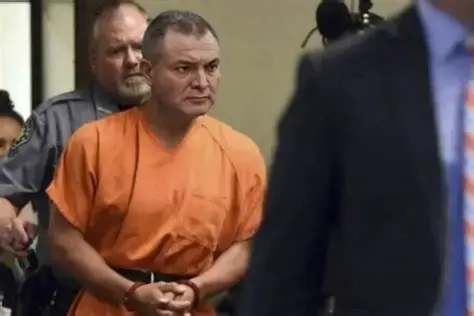
He served as Mexico's Secretary of Public Security from 2006 to 2012 and was one of the country's most senior officials responsible for combating organized crime. A U.S. federal jury convicted him in 2023 of participating in a continuing criminal enterprise involving cocaine trafficking and accepting millions of dollars in bribes from the Sinaloa Cartel.
Guinea-Bissau is perhaps the clearest warning for West Africa. The country became associated with major cocaine trafficking networks, while corruption and alleged involvement of political and military actors weakened state institutions. Transparency International has documented concerns about criminal networks penetrating the state apparatus, while the UN has emphasized that organized crime and drug trafficking can undermine political and social institutions. (Transparency International Knowledge Hub).
More recently, reporting on Guinea-Bissau has continued to highlight allegations involving military and civilian officials and the drug trade. The country illustrates the danger of allowing narcotics money to become powerful enough to influence institutions that are supposed to fight it. (Freedom House).
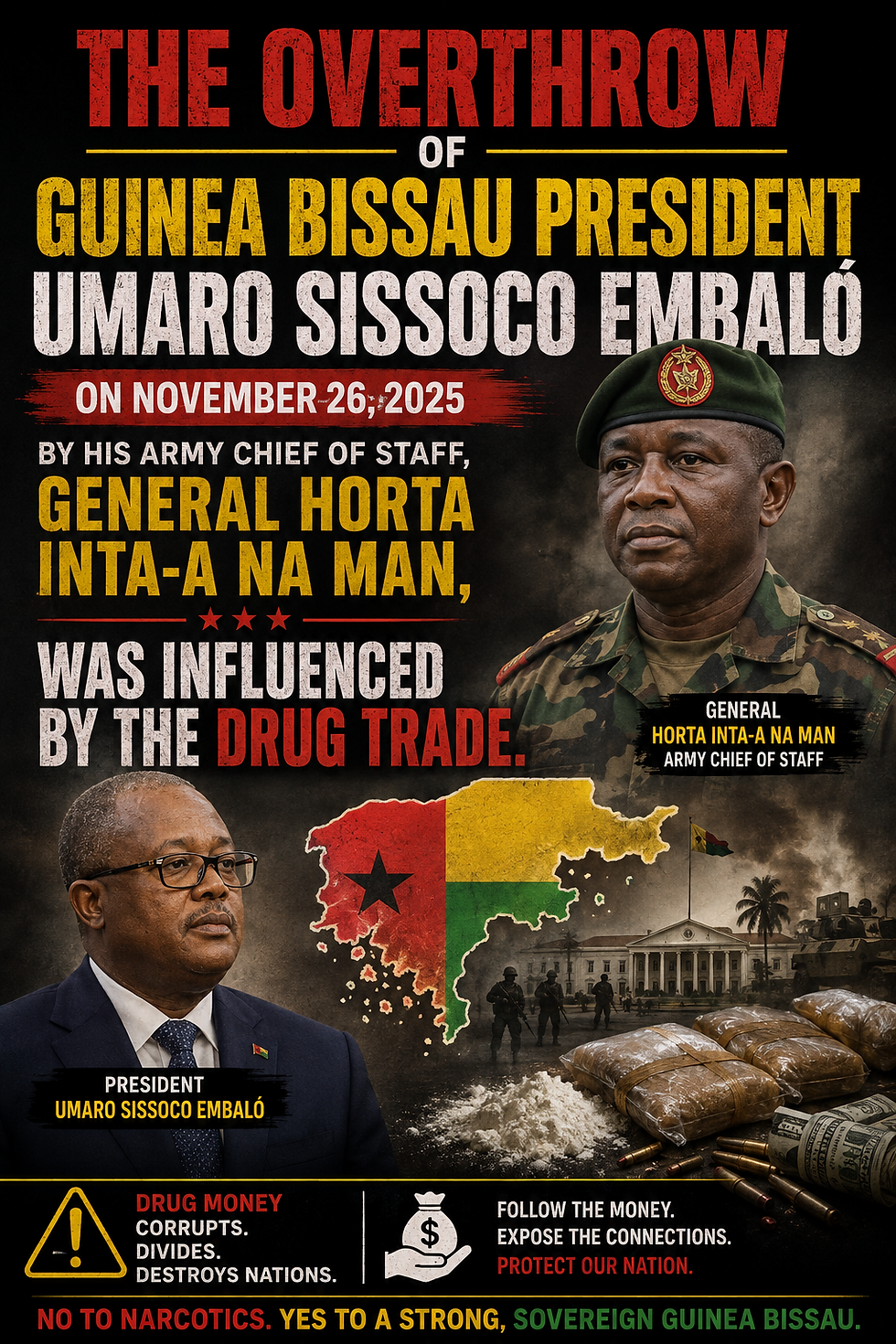
There is another important lesson from Guinea-Bissau: law enforcement must have resources and financial-investigation capacity. An IMF assessment noted that Guinea-Bissau's judicial police faced significant resource constraints, even as specialized investigators were dealing with corruption, money laundering, drug trafficking, and organized crime. (IMF eLibrary).
Liberia must not wait until the problem reaches that stage.
I therefore applaud the government for having the courage to step outside the usual box with the appointment of General Ziankhan. But the appointment must be accompanied by an extraordinary response.
If we genuinely believe that drug trafficking and corruption have reached a level capable of compromising law-enforcement institutions, then we should treat the LDEA as a priority national-security project. Give the leadership the resources it needs. Build a multidisciplinary team around it. Strengthen financial intelligence. Protect investigators from interference. Improve international cooperation. Follow the money. Prosecute the facilitators and financiers—not just the couriers.
Most importantly, we must ensure that the fight against drugs does not become another institution where powerful interests can buy influence.

This is bigger than whether General Ziankahn has been promoted or demoted. The real question is whether Liberia is prepared to confront a threat that, if allowed to become deeply embedded in our institutions, could cause irreparable damage to the country.
For that reason, I believe the appointment should be judged by one standard: Does it give Liberia a better chance of winning this fight?
If the answer is yes, then we should support it—and do everything necessary to make it succeed.


Comments