Economic Supply Chain & the AAID

Updated: Feb 18
By: Cyrus L Gray - Monrovia
February 2, 2026
Introduction: Development Planning and the Supply Chain Question in Liberia
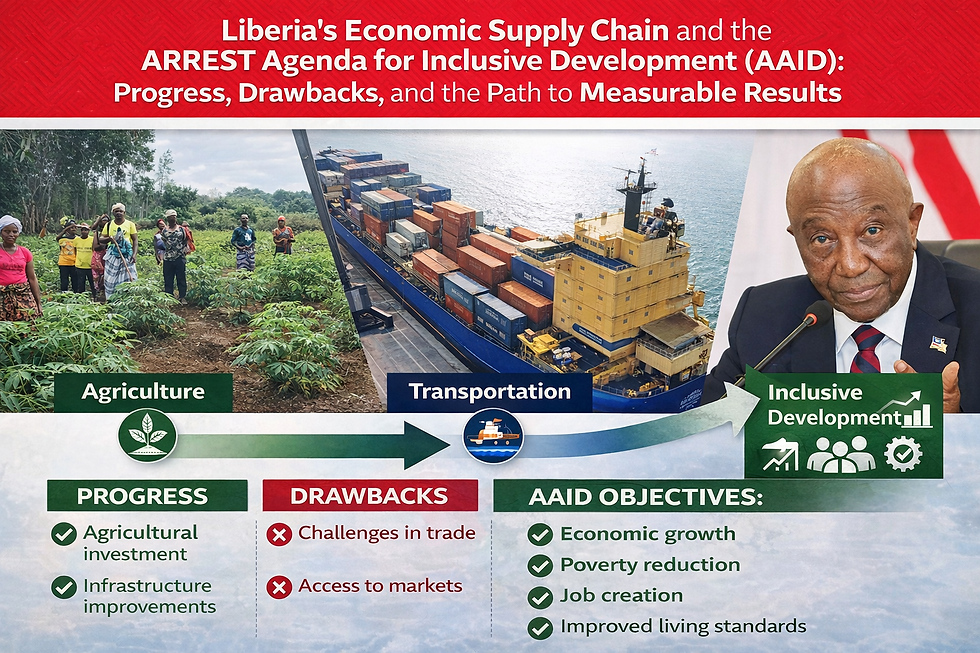
Since the end of Liberia’s civil conflict, every new administration has begun its tenure by articulating a national development framework. These plans are intended to stabilize the economy, rebuild institutions, and place the country on a path toward inclusive growth. The current administration, led by President Joseph Nyumah Boakai, has adopted the ARREST Agenda for Inclusive Development (AAID) 2025–2029, which identifies Agriculture, Roads, Rule of Law, Education, Sanitation, and Tourism as the core drivers of national transformation.
From a supply chain perspective, these six pillars are not discrete or self-contained sectors. Rather, they form an interconnected economic system that determines how goods are produced, transported, regulated, processed, marketed, and consumed. Liberia’s historical challenge has not been the absence of natural or human resources, but the weakness of linkages along this supply chain—particularly between rural production zones and urban centers or export gateways.
President Boakai’s 2026 State of the Nation Address (SONA) underscores a decisive shift “from resolve to results,” highlighting early gains while openly acknowledging persistent constraints in implementation capacity and financing. Any meaningful assessment of the AAID must therefore examine how effectively these pillars are strengthening Liberia’s economic supply chain as a single, integrated system.
Progress under the AAID: Early Signals of Supply Chain Improvement
Agriculture and Agribusiness
Agriculture remains the backbone of Liberia’s economy and the foundation of its
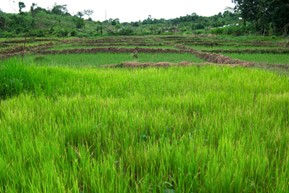
domestic supply chain. According to the 2026 SONA, the sector contributed significantly to the 5.1 percent GDP growth recorded in 2025, alongside mining and services.
This growth reflects renewed policy attention to productive sectors rather than exclusive reliance on extractive rents. Institutional reforms—such as the establishment of the National Food Assistance Agency and the proposed expansion of the mandate of the Liberia Agriculture Commodities Regulatory Authority—signal a shift toward improved coordination, quality assurance, and market access. Under the AAID, agriculture is no longer treated solely as subsistence activity, but as a value chain linking production, storage, processing, logistics, and trade. This approach aligns with the agenda’s emphasis on import substitution, food security, and employment creation, particularly for youth and women.
Roads and Transport Infrastructure

Roads are the physical backbone of Liberia’s supply chain. The AAID sets ambitious targets, including paving at least 485 kilometers of primary roads and reducing transportation costs by 30 percent.
In 2025, road infrastructure accounted for a significant share of capital expenditure, reflecting recognition at the highest policy level that poor connectivity undermines agricultural commercialization, tourism development, and domestic trade. Improved road access is already facilitating the movement of agricultural goods from rural counties to urban markets, helping to reduce post-harvest losses, stabilize prices, and improve producer incomes. Instead of the usual more than three hours, it now takes just over an hour to travel from Ganta to Tappita.
Rule of Law and Governance
A functional supply chain depends on predictable rules, secure property rights, and contract enforcement. Progress reported in the 2026 SONA—including decentralization legislation, anti-corruption reforms, and proposals for a specialized property court—addresses long-standing bottlenecks related to land disputes and regulatory uncertainty. These reforms directly reduce transaction risks for farmers, investors, and infrastructure developers, particularly in agriculture, mining, and energy.
Education, Sanitation, and Tourism
Human capital development and improved sanitation are foundational to raising labor productivity across Liberia’s entire economic supply chain. Progress under the ARREST Agenda has begun to restore focus on education quality, skills development, and public health—critical prerequisites for a productive workforce. However, the benefits of these investments are constrained by the structure of Liberia’s labor market, where a majority of working-age Liberians—particularly youth—remain engaged in low-productivity informal employment with limited income security and few pathways for skills advancement.
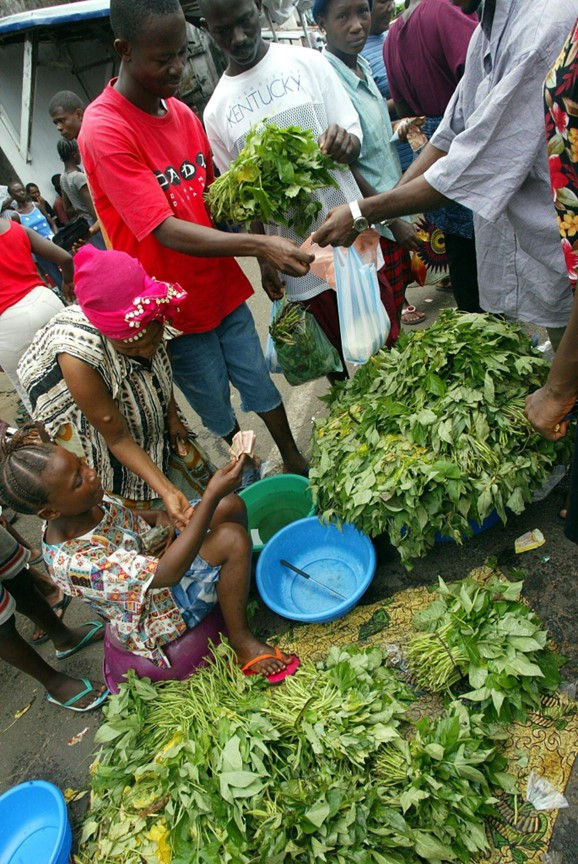
This persistent informality reflects a mismatch between education outcomes and labor market demand. While school enrollment and basic education access have improved over time, the economy has not yet generated sufficient formal-sector jobs to absorb new entrants into the labor force. As a result, many young Liberians transition from education directly into informal agriculture, petty trade, or subsistence services, limiting the productivity gains that human capital investments are intended to deliver.
Within this context, tourism—identified in both the AAID and the State of the Nation Address as underperforming but high-potential—offers a uniquely integrative opportunity. Tourism value chains can absorb youth at multiple skill levels while linking agriculture, transport, construction, culture, hospitality, and creative services. When supported by reliable sanitation, skills training, and basic infrastructure, tourism can help shift employment from informality toward structured, income-generating activities, particularly for youth and women.

If strategically developed, tourism can function not only as a source of foreign exchange, but also as a labor-market bridge, converting human capital investments into jobs, supporting small and medium enterprises, and gradually formalizing segments of Liberia’s economy. In this sense, education, sanitation, and tourism are not peripheral social sectors—they are central to addressing Liberia’s youth employment challenge and unlocking productivity across the supply chain.
Despite these gains, significant challenges persist. Liberia’s supply chains remain fragmented. Most agricultural products are sold domestically or exported in raw form, with minimal processing. This limits value addition, job creation, and income growth—a structural weakness explicitly acknowledged in the AAID.
Financing constraints also remain acute. The 2026 SONA highlights the abrupt reduction in donor support in 2025, which disrupted ongoing projects and exposed the vulnerability of donor-dependent development models. Although domestic revenue mobilization has improved, financing gaps continue to affect infrastructure, education, and sanitation—critical supply chain inputs.
Institutional capacity constraints at national and sub-national levels further undermine implementation. While the AAID is comprehensive, translating policy into coordinated action across ministries, agencies, and counties remains difficult. Lingering governance concerns continue to discourage private investment and raise supply chain costs.
Persistent mismatch between education outcomes and labor market needs leaves many young Liberians trapped in low-productivity informal activities, limiting competitiveness and upward mobility within domestic value chains.
Ensuring Measurable Progress: Lessons from International Best Practice
To ensure that the AAID delivers measurable and sustained improvements, international experience points to several critical actions. Liberia must adopt a value-chain-first approach, prioritizing complete systems rather than isolated sectors. Selected agricultural and tourism value chains—such as rice, cassava, cocoa, fisheries, eco-tourism, and cultural tourism—should be developed through deliberate coordination among producers, processors, transporters, financiers, and regulators.
Infrastructure investments must be tightly linked to production. Feeder roads connecting farms and fishing communities to markets often generate higher economic returns than isolated highways. Domestic resource mobilization should be deepened by earmarking a portion of improved revenues for infrastructure maintenance, sanitation, and education, thereby reducing donor dependence and protecting supply chain investments.
A critical cross-cutting requirement is the reform of State-Owned Enterprises (SOEs). Institutions such as the National Port Authority, Liberia Electricity Corporation, Liberia Petroleum Refining Corporation, Liberia Telecommunications Corporation, and the National Oil Company of Liberia sit at the heart of the economic supply chain. International best practice demonstrates that professional governance, commercial discipline balanced with public service obligations, transparency, and selective use of PPPs can transform SOEs from bottlenecks into enablers of growth and reliable sources of non-tax revenue.

Private sector–led growth must also be pursued deliberately. Mobilizing domestic capital—through pension funds, savings cooperatives, and organized alongside foreign direct investment can deepen local ownership and retain value within the economy. At the same time, investment promotion must become proactive, with the National Investment Commission and Liberia’s overseas missions aggressively marketing bankable opportunities through roadshows, trade fairs, and diaspora engagement. group savings schemes—
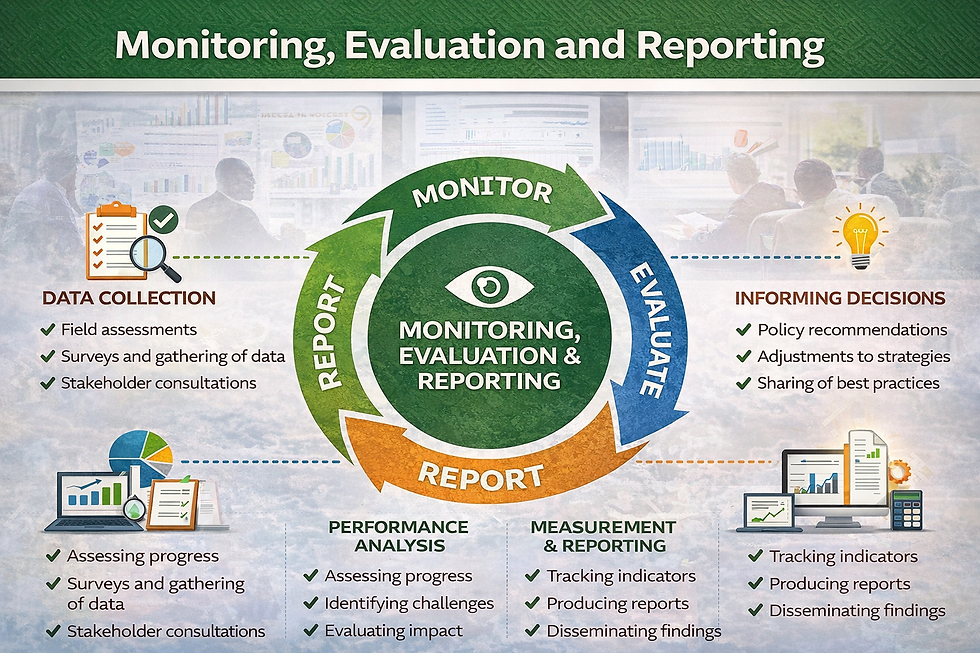
Measurable progress depends on results-based monitoring and evaluation. Establishing a dedicated, independent AAID Secretariat—staffed by highly trained development, financial, and legal professionals—would institutionalize performance tracking across all pillars, shifting Liberia from compliance-driven planning to performance-driven governance.
Conclusion: Choosing Integration Over Hesitation
The ARREST Agenda for Inclusive Development represents a more integrated framework than many of Liberia’s previous development plans. Early progress, as outlined in President Boakai’s 2026 State of the Nation Address, is encouraging—particularly in agriculture, roads, and macroeconomic stability. Yet persistent challenges related to financing, institutional capacity, and value addition continue to constrain impact.
If Liberia can successfully link its six ARREST pillars into coherent economic supply chains—supported by strong institutions, skilled human capital, and disciplined financing—the AAID can move beyond aspiration to measurable transformation. In doing so, it would not only advance Vision 2030, but also lay the foundation for a resilient, inclusive, and competitive Liberian economy.
There are those who argue that President Boakai’s vision—particularly the
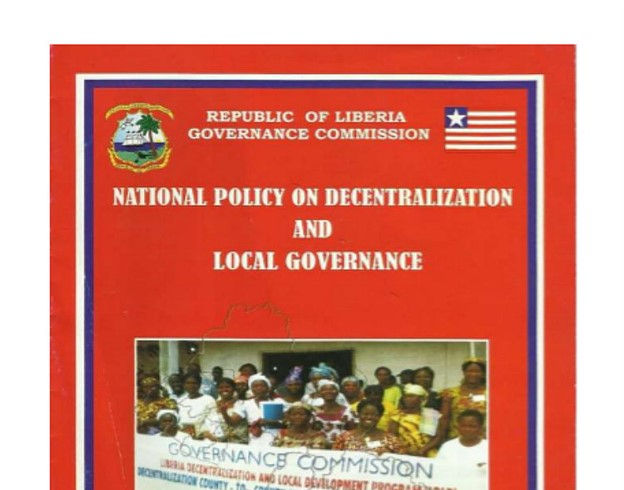
decentralization of governance and the rebalancing of national revenue—is overly ambitious for Liberia’s current realities. In truth, this view misunderstands both Liberia’s history and the nature of development itself. As former President Ellen Johnson Sirleaf observed, “If your dreams do not scare you, they are not big enough.” Transformational change demands ambition that stretches beyond comfort.
Liberia has stood at such a crossroads before. More than 150 years ago, the nation faced a defining choice: integrate the interior with the coastal settlements or remain confined within the stagnation of an inherited and exclusionary order. That moment of ambition was violently resisted, and President Edward J. Roye was overthrown and killed in 1871 because his vision of expansion, integration, and modernization threatened entrenched interests fearful of change.

The consequences of that fear have echoed across generations. For too long, Liberia has hesitated at the threshold of its own potential—afraid to decentralize power, trust local initiative, invest boldly in national integration, and allow prosperity to spread beyond narrow corridors of privilege. The result has been repeated cycles of uneven growth and missed opportunity.
The ARREST Agenda for Inclusive Development represents a deliberate break from that historical hesitation. Its emphasis on integration—of regions, markets, institutions, and people—is not recklessness; it is overdue realism. Nations do not develop by managing decline or preserving outdated structures. They develop by confronting structural weaknesses head-on and choosing a different path.
Liberia has reached another historic moment of choice. To retreat into caution would be to repeat the mistakes of the past.
To move forward with conviction—to integrate the interior with the coast, policy with performance, and ambition with accountability—is to finally embrace the future Liberia has long deferred. It is time, quite simply, to do something different.

The Author, Cyrus L Gray, Jr. is National Consultant for the Republic of Ireland Sponsored "Strengthening Liberia's Political Governance" Project implemented by the Center for Democratic Governance (CDG), NAYMOTE Partners for Democratic Development and CENTAL, three of the most prominent Liberian CSOs. He has extensive experience in the International Development Economy, having served as USAID Supply Chain Advisor and private sector project development in supply chain infrastructure - seaport, airport, roads, rails and maritime transport.


Comments